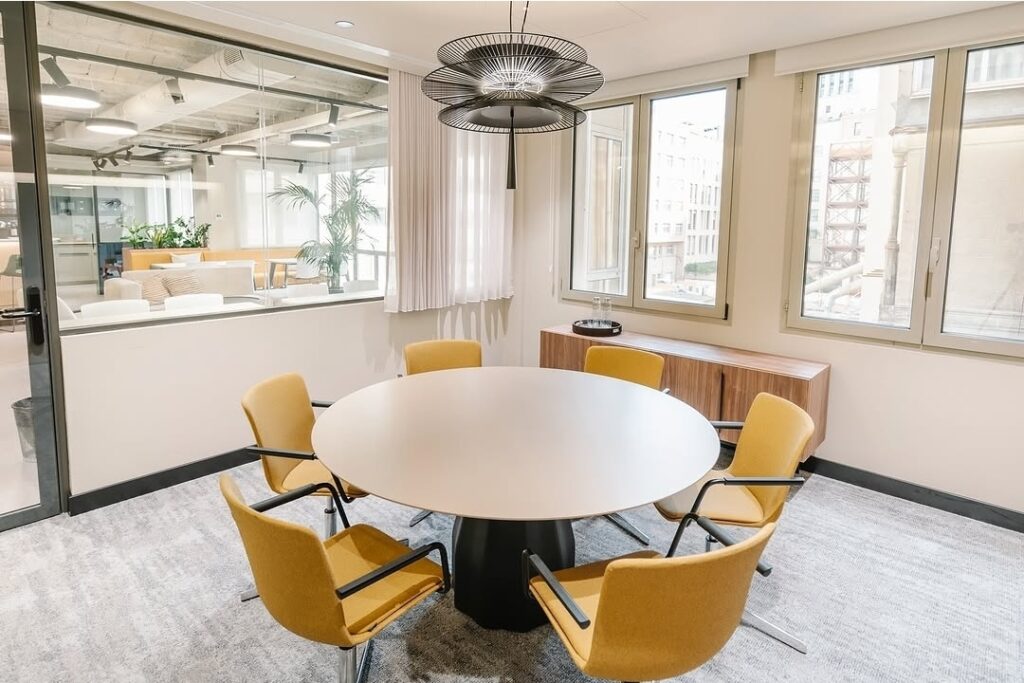
Technology and IoT in Workspaces: Towards Smarter and More Efficient Environments
The evolution of workspaces can no longer be understood without technology. In a context shaped by flexibility, efficiency, and user experience, the coworking and flexible workspace sector is increasingly incorporating advanced solutions to adapt to the evolving needs of companies and professionals.
In cities like Barcelona, where innovation and quality of environment are key factors, spaces such as GRAN VIA Business & Meeting Center reflect this transformation towards smarter, more connected, and experience-driven work models.
Among these innovations, the Internet of Things (IoT) stands out as one of the key drivers, enabling the transformation of workspaces into intelligent, connected, and highly efficient environments.
From Physical Spaces to Smart Environments
The concept of the office has evolved significantly in recent years. It is no longer just about providing a place to work, but about creating environments capable of anticipating user needs and optimizing performance in real time.
In this context, IoT enables the integration of devices and systems that collect and analyze data to improve key aspects such as space occupancy, energy consumption, and environmental comfort.
Smart lighting, access control, efficient climate systems, and automated booking tools are just some examples of how technology is redefining workspace management.
Efficiency, Sustainability, and User Experience
One of the main benefits of integrating technology into workspaces is improved efficiency. These systems allow resources to be adjusted according to real demand, reducing consumption and optimizing costs.
This has a direct impact on sustainability as well. Energy monitoring and the use of more efficient technologies help reduce environmental footprint, aligning with ESG criteria that are increasingly relevant in corporate decision-making.
Beyond efficiency, technology also enhances user experience. Better lighting, optimal temperatures, comfortable environments, and streamlined processes all contribute to a more productive and enjoyable workplace.
The ability to manage spaces remotely, adapt services in real time, and support hybrid work models makes technology a key differentiating factor in modern workspaces.
In this context, IoT is no longer a one-off innovation, but a structural foundation upon which the workspaces of the future are built.
GRAN VIA Business & Meeting Center: Technology Serving Experience
At GRAN VIA Business & Meeting Center, this evolution is part of how we understand workspaces.
In our facilities, we have implemented technological solutions aimed at improving both efficiency and comfort. For example, smart building systems enable intelligent control of lighting in offices and shared areas, allowing remote management and contributing to energy savings of between 15% and 20%.
In addition, indoor environmental quality is enhanced through more efficient air conditioning systems, significantly reducing emissions and consumption. All of this is integrated into a centralized control system that optimizes the overall performance of the space.
These advancements do not only improve the daily experience of users but also reflect our commitment to sustainability, innovation, and quality.
At GRAN VIA, we see this evolution as an opportunity to continue offering professional environments that support the growth and needs of companies and professionals in a constantly changing landscape.
Discover how our spaces integrate technology, comfort, and flexibility in the heart of Barcelona.